

Achieving Financial Independence: Experts Discuss Development of BRICS National Currency Settlements

How can BRICS countries move away from the dollar in international settlements, and what can they do to advance this goal today? These questions were discussed by experts during a round table at HSE University. The event was organised by the Multilateral Strategic Projects Office together with the HSE Faculty of World Economy and International Affairs as part of HSE’s activities within the BRICS Network University and the Joint Basic Research Projects ‘International Academic Cooperation of HSE University.’
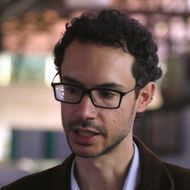
Bruno de Conti
Despite efforts to introduce new currencies into international trade, the dollar is still used in 88% of transactions, noted Bruno de Conti, Professor of Economic Theory at the University of Campinas. This means that only 12% of transactions are conducted in national currencies. ‘The South African rand accounts for 1%, the Brazilian real has the same share, and due to sanctions, there are virtually no transactions in roubles. These figures are negligible compared to BRICS’ importance to the global economy,’ he said. Active steps to challenge the dollar’s dominance are being taken, particularly in China: the share of the Chinese yuan has risen from almost zero in 2007 to 7%. ‘There are bilateral initiatives within BRICS, and this is important especially now that BRICS is expanding,’ Bruno de Conti added.
He quoted Brazilian President Luiz Inácio Lula da Silva, who said in 2023 that he constantly wonders why all countries are forced to support the dollar instead of trading in their own currencies. According to the scholar, changing the situation requires addressing internal BRICS challenges—such as inertia and the difficulty of reconciling diverse national interests. Overcoming internal disagreements and strengthening digitalisation are essential steps forward.

Alexandra Morozkina
Alexandra Morozkina, Associate Professor at the HSE Faculty of World Economy and International Affairs, noted that the use of BRICS currencies in international trade is expanding. The share of the yuan in China’s international trade increased from 15% in 2021 to 28% in 2024. ‘The share of the rouble in total Russian exports grew from 12% in 2022 to 41% in 2024,’ she said. In 2023, a landmark deal took place: the yuan was used for the first time to settle oil transactions between the UAE and China. Increasing the liquidity of national currencies is a step towards de-dollarisation, and BRICS is gradually building the necessary infrastructure for it. ‘The BRICS Grain Exchange is also a step towards setting prices in BRICS currencies,’ Alexandra Morozkina explained.

Alexey Ponomarenko
Alexey Ponomarenko, Professor at the HSE Joint Department with the Bank of Russia, presented a concept for creating a closed international settlement system and discussed in detail models for such settlements, using the Mariana Project as an example. He pointed out that in designing such a system, the requirements for a single technical settlement unit are minimal, meaning that no specific changes to the monetary systems of participating countries would be necessary. Prof. Alexey Ponomarenko emphasised the importance of automatically determining exchange rates—a mechanism that could naturally regulate payment flows.
The round table was moderated by Olga Biryukova, Associate Professor at the HSE Faculty of World Economy and International Affairs. Anastasia Vyskubina, Head of the Online Project Support Department at HSE University, also took part in the discussion.
See also:

HSE Scientists Reveal What Drives Public Trust in Science
Researchers at HSE ISSEK have analysed the level of trust in scientific knowledge in Russian society and the factors shaping attitudes and perceptions. It was found that trust in science depends more on everyday experience, social expectations, and the perceived promises of science than on objective knowledge. The article has been published in Universe of Russia.
IDLab: Fascinating Research, Tough Deadlines, and Academic Drive
The International Laboratory of Intangible-driven Economy (IDLab) was established at the HSE campus in Perm 11 years ago. Its expertise in data processing and analysis allows researchers to combine fundamental studies with applied projects, including the development of risk and cybersecurity models for Sber. The head of the laboratory, Professor Petr Parshakov, and Senior Research Fellow Professor Mariya Molodchik spoke to the HSE News Service about IDLab’s work.
HSE Lecturers Awarded Yandex ML Prize 2025
The Yandex ML Prize is awarded to lecturers and heads of educational programmes who contribute to the development of artificial intelligence in Russia. This year, 10 laureates were selected from 300 applicants, including three members of the HSE Faculty of Computer Science (FCS). A special Hall of Fame award was also presented for contributions to the establishment of machine learning as an academic field. One of the recipients was Dmitry Vetrov, Research Professor at the HSE FCS.
HSE Tops Ranking of Universities Participating in Priority 2030 Programme
The Russian Ministry of Science and Higher Education has published an updated list of participants in the Priority 2030 programme. A total of 106 universities will receive support this year. HSE University was included in the first group and topped the ranking.
HSE University and Banking and Finance Academy of Uzbekistan Sign Memorandum on Scientific Cooperation
The partnership aims to foster academic collaboration in the fields of global economics, sustainable development, and Islamic finance. Strengthening academic ties with Uzbekistan represents a promising direction for scientific exchanges and the implementation of international projects in sustainable development.
HSE University Holds HSE CS × BRICS Ideathon
On November 9, 2025, the HSE CS × BRICS Ideathon—a large-scale intensive event for students aimed at developing international project skills and finding solutions to current challenges facing BRICS countries—took place at HSE University’s Pokrovsky Bulvar campus. The event was organised by the Multilateral Strategic Projects Office with the support of the BRICS Expert Council–Russia , the Faculty of Computer Science (FCS), and the HSE FCS Hackathon Club
HSE Scientists Optimise Training of Generative Flow Networks
Researchers at the HSE Faculty of Computer Science have optimised the training method for generative flow neural networks to handle unstructured tasks, which could make the search for new drugs more efficient. The results of their work were presented at ICLR 2025, one of the world’s leading conferences on machine learning. The paper is available at Arxiv.org.
Neural Network Trained to Predict Crises in Russian Stock Market
Economists from HSE University have developed a neural network model that can predict the onset of a short-term stock market crisis with over 83% accuracy, one day in advance. The model performs well even on complex, imbalanced data and incorporates not only economic indicators but also investor sentiment. The paper by Tamara Teplova, Maksim Fayzulin, and Aleksei Kurkin from the Centre for Financial Research and Data Analytics at the HSE Faculty of Economic Sciences has been published in Socio-Economic Planning Sciences.
‘To Help Make the World More Sustainable, Fair, and Humane’
The BRICS International School: New Generation has concluded at HSE University, bringing together more than 100 participants from 38 BRICS and Global South countries. The attendees included early-career researchers, diplomats, entrepreneurs, journalists, and civil society representatives.
Larger Groups of Students Use AI More Effectively in Learning
Researchers at the Institute of Education and the Faculty of Economic Sciences at HSE University have studied what factors determine the success of student group projects when they are completed with the help of artificial intelligence (AI). Their findings suggest that, in addition to the knowledge level of the team members, the size of the group also plays a significant role—the larger it is, the more efficient the process becomes. The study was published in Innovations in Education and Teaching International.